Jumbo Home Loans in North Carolina
Myers Park and Eastover, Chapel Hill and north Raleigh, the Asheville hills and the beach towns: North Carolina’s jumbo market spans banking money and mountain views, and its purchases still run on the due-diligence clock. We place jumbo files with lenders whose rules fit and whose timelines survive that clock. No state tax on the loan. Licensed in all 100 counties.
North Carolina Mortgage Lender License L-205335. NMLS #1925352.
Jumbo in North Carolina, 2026
Jumbo threshold
Above $832,750, every NC county
Typical credit score
700 and up; best pricing from about 760
Down payment
Commonly 10 to 20 percent
State tax on the loan
None; the excise tax is on deeds, seller-paid
Closing
A North Carolina attorney, as the State Bar requires
$832,750
Loans above this are jumbo in North Carolina
700+
Typical minimum credit score, lender-set
100
North Carolina counties, licensed statewide
4.9
Average of 5,300+ Google reviews
Jumbo underwriting on a due-diligence deadline.
North Carolina is jumbo above $832,750 in 2026, in every county, and the market above that line is broader than people expect: Charlotte’s banking neighbourhoods, the Triangle’s research-money streets, Asheville’s view lots, Wilmington and the beach towns. What the state adds is urgency. The due-diligence fee, paid to the seller and gone if you walk, means a jumbo purchase has to underwrite inside a negotiated window, with no agency rulebook smoothing the way.
Jumbo lenders set their own rules: typically a 700 score with the best pricing from 760, 10 to 20 percent down, six to eighteen months of reserves, full documentation, and on larger loans a second appraisal, which costs days the clock cannot spare unless it is anticipated. Most jumbo programs charge no monthly mortgage insurance at any down payment, though requirements vary by lender, program and loan-to-value. North Carolina charges nothing to record the loan, and the excise tax belongs to deeds, seller-paid.
This page covers jumbo loans in North Carolina. The jumbo hub explains the market itself; conventional in North Carolina covers everything under the line; and buying in North Carolina and our North Carolina page round out the state.
What jumbo lenders ask for, and what North Carolina adds.
There is no agency rulebook above the line; these are the ranges we see across the jumbo lenders we work with. The last column is the North Carolina layer.
| Requirement | Typical range | In North Carolina |
|---|---|---|
| Credit score | Usually 700; best pricing from 760; a few lenders consider high 600s with compensating factors | The biggest lever on the rate at this size |
| Down payment | Commonly 10 to 20 percent; some programs hold 10 percent to a set loan amount | Banking and research relocations usually document the funds cleanly |
| Cash reserves | Often 6 to 18 months of the full payment | Brokerage counts at most lenders; retirement usually at a discount |
| Documentation | Full income and asset documentation; self-employed files need two years of returns | Bonus-heavy banking income needs a lender that averages it fairly; we pick accordingly |
| Appraisal | One full appraisal; a second on larger loan amounts at many lenders | Mountain view lots and beachfront comp thinly; we build the book before the visit, inside the due-diligence window |
| Mortgage insurance | Most programs charge none at any down payment, though it varies by lender, program and loan-to-value | No state wrinkle; coastal files add wind or flood cover to the escrow |
Ranges reflect the jumbo lenders we work with; each writes its own rules, which is why the same file prices differently across them.
Three North Carolina jumbo files we see most.
Different shapes, different lenders. All three close with a North Carolina attorney.
Buying
Charlotte and the Triangle
Myers Park, Eastover, Chapel Hill, north Raleigh: purchases above the line on a due-diligence clock. We verify the file before you offer and anticipate the second appraisal, so the window holds.
The mountains
Asheville and the Highlands
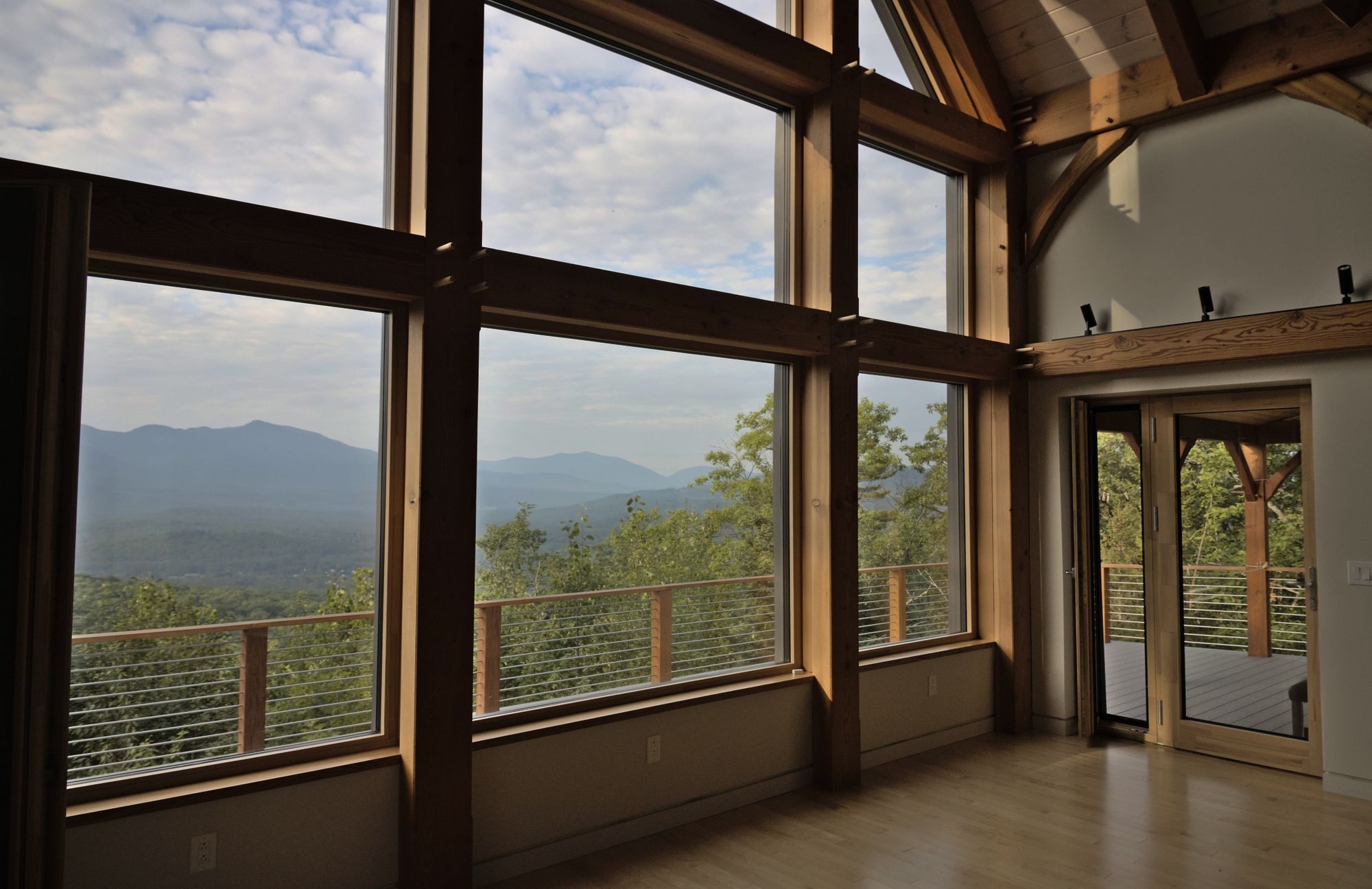
View lots and gated mountain communities comp thinly and often price as second homes, usually from 20 percent down. The use question comes first, because rental intent changes the program.
The coast
Wilmington to the Outer Banks
Beachfront jumbo adds wind and flood cover to the escrow and the insurer’s appetite to the underwrite. We bind the cover early so the ratio never meets a surprise.
The due-diligence fee makes jumbo speed a Carolina skill.
A jumbo underwrite has more moving parts than a conforming one: bigger documentation, manual review, sometimes two appraisals. In most states that costs calendar; in North Carolina it costs the due-diligence fee if the window closes first. So the file is built before the offer: income and assets verified up front, the lender chosen for its actual turn times, appraisers engaged the morning the contract signs.
Done in that order, a North Carolina jumbo closes as smoothly as any conforming loan, with the advantages the market offers: no monthly mortgage insurance on most programs, though requirements vary by lender, program and loan-to-value, lender-by-lender pricing worth shopping, and a state that adds nothing to the bill but the attorney’s fee.

The mountains to the Outer Banks
Jumbo purchases and refinances closed with a North Carolina attorney near you, in all 100 counties.
Six North Carolina details on a jumbo file.
What the state changes at this loan size. All of it appears on your Loan Estimate from the start.
01
No tax on the loan
North Carolina charges nothing to record a deed of trust at any size, and the excise tax, $1 per $500 of the price, sits on the deed and is customarily seller-paid.
02
Attorney closings
The State Bar requires a North Carolina attorney at any loan size. You choose the firm; larger wires simply need a day’s notice to land before the table.
03
The due-diligence window
Jumbo underwriting must finish inside it, or the fee is at risk. Lender choice is a timeline choice as much as a pricing one, and we treat it that way.
04
Thin comps, two appraisals
Mountain views and beachfront comp thinly, and many lenders want a second appraisal on the largest loans. Both appraisers get the same comparable book from us.
05
Coastal insurance
Wind or flood cover joins the escrow east of I-95 and on the coast, and the premium feeds the ratio. We bind it early.
06
The rescission period on refinances
When a jumbo refinance is secured by your principal residence, federal law gives you three business days to cancel, counted under federal rules from closing and delivery of the required notices; the payoff funds on the fourth. A mountain or beach second home has no waiting period.
What would the payment look like?
Set a price above $832,750 and your down payment. Most jumbo programs charge no monthly mortgage insurance, so the payment is principal, interest, taxes, insurance and any HOA dues.
The U.S. mortgage market right now.
National average conforming rates from the Federal Reserve Bank of St. Louis FRED database (the Freddie Mac survey for conventional, the Optimal Blue indices for FHA and VA), shown as third-party market benchmarks, not MortgagePros pricing. They describe conforming, FHA and VA loans, not jumbo pricing, which each lender sets on its own; the jumbo figure that matters is the one quoted on your file.
Conventional 30-year fixed, U.S. average
7.40%
FHA 30-year fixed, U.S. average
7.18%
VA 30-year fixed, U.S. average
7.09%
Sources: Freddie Mac Primary Mortgage Market Survey (conventional, 30-year national average, week of Oct 8, 2026) and Optimal Blue Mortgage Market Indices (FHA and VA, 30-year national averages as of Oct 8, 2026), distributed through FRED, Federal Reserve Bank of St. Louis; the figures and dates refresh automatically from the source. These are third-party market benchmarks, not MortgagePros rates and not an offer of credit. Your rate and APR depend on your credit, loan type, property and lock date.
How a North Carolina jumbo works with us.
Four steps, one licensed pro, a North Carolina attorney closing.
1
Verified before the offer
Income, assets and reserves reviewed up front, so the due-diligence fee rides on a file that is already underwritten in substance.
2
Placed for speed and price
The file goes to jumbo lenders whose boxes fit it and whose turn times survive the window; you see the spread.
3
Appraisals inside the window
Ordered the morning the contract signs, briefed with comps, the second appraisal anticipated where loan size requires it.
4
Close with your attorney
Sign at the firm you chose. On a refinance of your own home, the payoff funds once that period ends.
Ready to price a North Carolina jumbo?
A North Carolina-licensed pro maps your file against multiple jumbo lenders, with the due-diligence clock built into the plan. Free, and it starts without a hard credit pull.
Jumbo loans in North Carolina, answered.
The questions North Carolina jumbo borrowers ask us most. If yours is not here, a licensed pro will answer it directly, with no obligation.
When is a loan jumbo in North Carolina?
Above $832,750 for a one-unit home in 2026, in every county; the FHFA resets the figure each year. Below the line, conventional in North Carolina applies, and conforming terms are usually the cheaper answer when you can structure under it.
Can a jumbo close inside a due-diligence window?
Yes, when it is built in the right order: the file verified before the offer, a lender chosen for real turn times, and appraisals ordered the morning the contract signs. The window is negotiated in your contract, and we tell you honestly what your file can do before you commit a fee to it.
What credit score and reserves do I need?
Most jumbo lenders start at 700 with the best pricing from about 760, and want six to eighteen months of full payments in reserves; a few consider high-600 scores with strong compensating factors. Each lender sets its own box, which is why we shop the placement.
Is there mortgage insurance on a jumbo loan?
Usually not: most jumbo programs charge no monthly mortgage insurance at any down payment, though requirements vary by lender, program and loan-to-value.
What does the state add to a jumbo closing?
Very little: the attorney’s fee and recording charges. North Carolina has no tax on the mortgage itself, and the excise tax applies to deeds, customarily paid by the seller on a purchase. Every figure is itemized on the Loan Estimate.
Do I have to come to Michigan?
No. Your licensed pro handles the loan by phone, email and e-signature, and the closing happens at the North Carolina attorney’s office you choose.
Talk to a North Carolina-licensed pro about a jumbo loan.
Tell us what you are looking to do and where in North Carolina. A licensed pro will call back, usually the same business day. Asking does not start a loan or require a hard credit pull.

Prefer to talk?
248-416-1361
Open 24/7. Ask for your pro by name.

Visit our office
880 W. Long Lake Rd, Suite 300
Troy, Michigan 48098, just off I-75. Free parking.

Licensed and reviewed
North Carolina Mortgage Lender License L-205335. NMLS #1925352. Rated 4.9 across 5,300+ Google reviews.