
FHA Home Loans in Florida
The loan that gets most first-time Florida buyers in the door: 3.5 percent down, credit scores from 580, and a down payment that can be a gift from family. We are licensed as a Florida mortgage broker and lender and are licensed statewide, in all 67 counties.
Florida Mortgage Broker License MBR3694 and Mortgage Lender License MLD2100. NMLS #1925352.
FHA in Florida, 2026
Limit in most counties
$541,287
Miami-Dade, Broward, Palm Beach
$667,000
Monroe (the Keys)
$990,150
Down payment
3.5% with a 580 score
Condos
Building must be on HUD’s approved list
$541,287
FHA limit in most Florida counties
3.5%
Down payment from a 580 credit score
$667,000
FHA limit in Miami-Dade, Broward and Palm Beach
67
Florida counties, licensed statewide
Why FHA is the workhorse loan in Florida.
Tampa, Orlando and Jacksonville are among the busiest FHA markets in the country, and for a plain reason: Florida prices climbed faster than Florida wages, and FHA is the program that qualifies a buyer with a 600 credit score, a debt load from student loans or a car, and a down payment that came from family. The 2026 limit of $541,287 covers the large majority of homes in those metros, and South Florida, Naples and the Keys carry higher limits that keep FHA in play there too.
Florida adds two things a Michigan or Ohio FHA buyer never thinks about. First, insurance: an FHA lender needs a bound homeowners policy, and flood insurance in a mapped flood zone, before funding, and both premiums go into the escrow that lenders use to qualify you. Second, condos: an FHA loan on a condo needs the building on HUD’s approved list or a single-unit approval, and since Florida’s condo reserve laws took effect, buildings without funded reserves and completed inspections often cannot pass.
This page covers the FHA program as it works in Florida. For the state as a whole, including the Florida licences, closing customs and every loan type we offer here, see our Florida page; for the program itself, see the FHA hub. Veterans should also read VA loans in Florida, which is usually the better deal.
Three ways to use FHA in Florida.
The same program covers buying, lowering the payment on an FHA loan you already have, and pulling equity out. Which one fits depends on where you are today.
Buying
FHA purchase
3.5 percent down from a 580 score, or 10 percent from 500. The down payment can be a documented gift from family. Sellers may pay up to 6 percent of the price toward your closing costs, which matters in a state with doc stamps and intangible tax to pay.
Lower payment
FHA Streamline refinance
If you already have an FHA loan, the streamline replaces it at a lower rate with no appraisal and, in most cases, no income verification, as long as the new loan gives you a real benefit. Florida charges doc stamps and intangible tax on the new note, so we put them in the break-even math.
Use equity
FHA cash-out refinance
Borrow up to 80 percent of the home’s value and take the difference in cash, on FHA’s credit and income terms. Common in Florida for a new roof or impact windows, which often lower the insurance premium enough to offset part of the new payment.
FHA rules, and how they play out in Florida.
HUD sets the program rules; lenders add overlays; Florida adds its costs. Your pro tells you where your file lands. The loan limits on this page are HUD’s 2026 figures; they vary by county and unit count and are updated each year.
| Item | FHA rule | In Florida |
|---|---|---|
| Minimum down payment | 3.5% with a 580 credit score; 10% from 500 to 579 | A documented gift from family can supply all of it |
| Upfront mortgage insurance | 1.75% of the loan, usually financed into it | Financing it adds to the loan, so doc stamps on the note and the intangible tax are calculated on the larger amount |
| Annual mortgage insurance | 0.55% a year on a 30-year loan with less than 5% down (0.50% with 5% or more); for the life of the loan below 10% down, 11 years otherwise | Escrowed monthly alongside Florida’s homeowners and flood insurance; the payment lenders qualify you on includes all three |
| Debt-to-income ratio | Up to about 50% with compensating factors | Insurance premiums count in the ratio, so a wind mitigation inspection that lowers the premium can be the difference in qualifying |
| Down payment source | Savings or documented gift funds from family | Gift funds need a gift letter and a paper trail before closing |
| Seller contributions | Up to 6% of the price toward closing costs | Florida sellers commonly pay the owner’s title policy anyway outside Miami-Dade, Broward, Sarasota and Collier; concessions come on top |
The 2026 one-unit FHA limit is $541,287 in most Florida counties, $667,000 in Miami-Dade, Broward and Palm Beach, $764,750 in Collier, $580,750 in Duval, $547,400 in Sarasota and $990,150 in Monroe.

Getting out of FHA mortgage insurance later is part of the plan.
With less than 10 percent down, FHA’s annual mortgage insurance stays for the life of the loan. The usual exit is a conventional refinance once you have about 20 percent equity, and Florida’s price growth over the last few years has brought many recent FHA buyers there sooner than they expected.
We run that math on the first call: what the payment looks like today with mortgage insurance, what it could look like after a refinance, and what Florida’s doc stamps and intangible tax add to a refinance, so the break-even is honest.
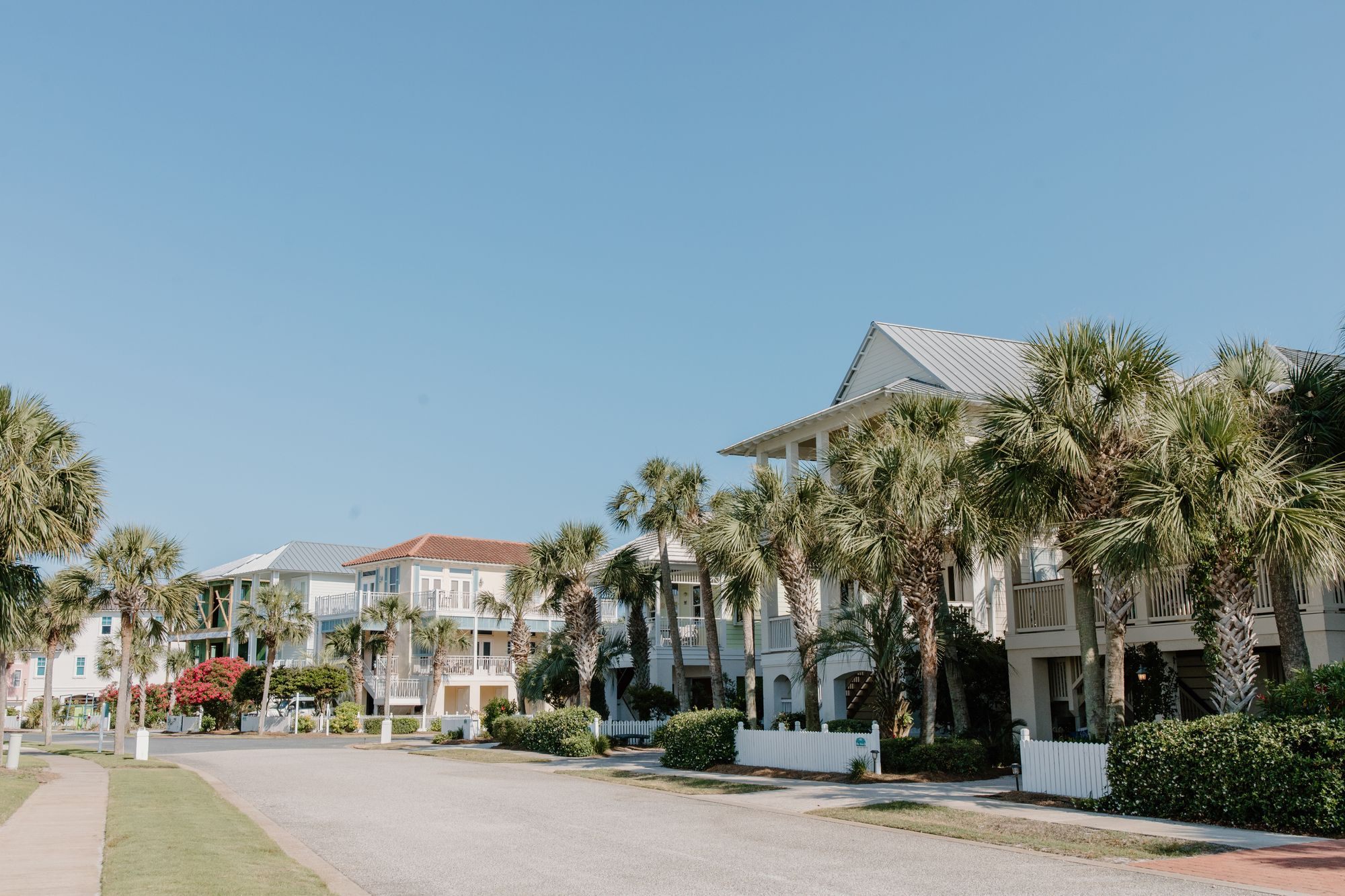
Statewide, remotely
FHA loans closed at a Florida title company near you, or by remote online notarization.
Six Florida details that decide an FHA approval.
None of these are in the national FHA guide. All of them come up on Florida files.
01
Condo approval
The building must be on HUD’s approved condominium list or qualify for a single-unit approval. Florida’s reserve and inspection laws mean many older coastal buildings do not qualify; we check the building before you write an offer.
02
Homeowners and flood insurance
A bound policy is required to fund, and flood insurance is mandatory in a Special Flood Hazard Area. Both are escrowed and both count in the qualifying payment. Older roofs and homes without wind mitigation features cost more to insure.
03
Doc stamps and intangible tax
Florida charges $0.35 per $100 on the note and 0.2 percent of the loan as intangible tax, on purchases and on refinances. On a $350,000 FHA loan that is about $1,925, payable by the buyer at closing.
04
The FHA appraisal
FHA appraisers check the property, not only the value: roof life, working systems, peeling paint on older homes, and safety items. In Florida that often means the roof and the electrical panel; we tell sellers what to expect.
05
Mortgage insurance for life
With less than 10 percent down the annual premium stays for the life of the loan. Many Florida FHA buyers refinance into a conventional loan once they reach 20 percent equity, which the state’s price growth has delivered quickly in recent years.
06
Homestead exemption
File with your county property appraiser by March 1 of the first year you own and occupy the home on January 1, which for most buyers is the year after closing. It removes up to $50,000 of assessed value and caps future increases at 3 percent a year, which lowers the tax escrow in your FHA payment.
What would an FHA payment be in Florida?
Choose FHA as the loan type and set the down payment to 3.5 percent. Add your county’s tax rate and a realistic Florida insurance figure; the mortgage insurance line is the cost you are weighing against getting in sooner.
The U.S. FHA market right now.
National average rates from the Federal Reserve Bank of St. Louis FRED database: the Freddie Mac survey for conventional and the Optimal Blue indices for FHA and VA, shown as third-party market benchmarks, not MortgagePros pricing. FHA note rates often look lower than conventional, but mortgage insurance is part of the real payment, so compare the whole payment rather than the rate.
FHA 30-year fixed, U.S. average
7.18%
Conventional 30-year fixed, U.S. average
7.40%
VA 30-year fixed, U.S. average
7.09%
Sources: Freddie Mac Primary Mortgage Market Survey (conventional, 30-year national average, week of Oct 8, 2026) and Optimal Blue Mortgage Market Indices (FHA and VA, 30-year national averages as of Oct 8, 2026), distributed through FRED, Federal Reserve Bank of St. Louis; the figures and dates refresh automatically from the source. These are third-party market benchmarks, not MortgagePros rates and not an offer of credit. Your rate and APR depend on your credit, loan type, property and lock date.
How an FHA loan works with us in Florida.
Four steps, one licensed pro, and a Florida closing near you.
1
Check the fit
A short call about your credit, savings and the home or area. We tell you whether FHA, a conventional 3 percent down loan or a VA loan is the better route.
2
Pre-approval with real numbers
Income, assets and credit verified, with Florida insurance and taxes in the payment, so the number you shop with is the one you close at.
3
Building and property checks
For a condo we pull the association documents and check HUD’s list before you offer. For a house we flag likely appraisal items and get an insurance quote early.
4
Close in Florida
At a title company near you, with a mobile notary, or by remote online notarization. Doc stamps, intangible tax and the first year of insurance are all on the closing statement, exactly as quoted.
Ready to see what FHA gets you in Florida?
A Florida-licensed pro quotes your FHA options with insurance and taxes already in the numbers. Free, and it starts without a hard credit pull.
FHA in Florida, answered.
The questions Florida buyers ask us about FHA loans most. If yours is not here, a licensed pro will answer it directly, with no obligation.
What is the FHA loan limit where I am buying?
For 2026, $541,287 for a one-unit home in most Florida counties, including Hillsborough, Pinellas, Orange, Polk, Lee and Brevard. It is $667,000 in Miami-Dade, Broward and Palm Beach, $764,750 in Collier, $580,750 in Duval, $547,400 in Sarasota and $990,150 in Monroe. Two- to four-unit limits are higher. Above the limit, a conventional or jumbo loan takes over.
Will an FHA loan work on a Florida condo?
Only if the building qualifies. It must be on HUD’s approved list or pass a single-unit approval, which looks at reserves, insurance, owner-occupancy and litigation. Since Florida’s condo safety laws, buildings without funded reserves and completed structural inspections frequently fail. We check before you are under contract.
How much are Florida’s taxes on an FHA loan?
The buyer pays documentary stamps on the note at $0.35 per $100 of the loan and intangible tax at 0.2 percent of the loan. On a $350,000 FHA mortgage that is $1,225 plus $700, about $1,925 in total. The seller customarily pays the $0.70 per $100 stamps on the deed. An FHA Streamline refinance pays the documentary stamps and intangible tax again on the new loan.
Does the mortgage insurance ever go away?
With 10 percent or more down, after 11 years. With less than 10 percent down, no: it stays for the life of the loan. The usual exit is refinancing into a conventional loan once you have 20 percent equity, and we plan for that from the start.
Do I have to come to Michigan?
No. Your licensed pro handles the loan by phone, email and e-signature, and the closing is at a Florida title company near you, with a mobile notary, or by remote online notarization. Our Florida licences are what allow us to broker and lend here.
Talk to a Florida-licensed pro about FHA.
Tell us what you are looking to do and where in Florida. A licensed pro will call back, usually the same business day. Asking does not start a loan or require a hard credit pull.

Prefer to talk?
248-416-1361
Open 24/7. Ask for your pro by name.

Visit our office
880 W. Long Lake Rd, Suite 300
Troy, Michigan 48098, just off I-75. Free parking.

Licensed and reviewed
Florida Mortgage Broker License MBR3694 and Mortgage Lender License MLD2100. NMLS #1925352. Rated 4.9 across 5,300+ Google reviews.