
Mortgage Refinance in Arizona
Arizona charges no transfer tax and no tax on the new mortgage, and an escrow closing costs a few hundred dollars, which keeps the break-even short, especially on an FHA or VA streamline. We are licensed as an Arizona mortgage banker and broker and are licensed statewide, in all 15 counties.
Arizona Mortgage Banker License 1029604 and Mortgage Broker License 1021032. NMLS #1925352.
Refinancing in Arizona, 2026
State tax on the new loan
None
Transfer tax
None
Cash-out
Up to 80% on FHA and most conventional (primary residence); VA higher
Streamlines
FHA Streamline and VA IRRRL, usually no appraisal
Closing
Escrow company; funds release when the deed of trust records
$0
Arizona tax on a new mortgage
80%
Maximum cash-out loan-to-value, conventional and FHA
15
Arizona counties, licensed statewide
4.9
Average of 5,300+ Google reviews
Why Arizona refinances break even faster than most.
A refinance pays for itself when the monthly saving has covered the closing costs, and Arizona keeps those costs low: no transfer tax, no mortgage tax, a flat county recording fee, and an escrow company instead of an attorney. The bill is mostly the lender’s charges, a new lender’s title policy, an appraisal where one is needed and the escrow fee. On a $350,000 refinance the whole thing commonly lands under $4,000, which is why even a modest rate drop can pay for itself inside two years.
Three things make an Arizona refinance worth running the numbers on. Metro Phoenix’s price growth has given many owners who bought with FHA the 20 percent equity to refinance into a conventional loan and drop mortgage insurance for good. A cash-out refinance is the usual way to fund a roof or air conditioning before summer, a pool, or debt consolidation. And a homeowner with a VA or FHA loan has a streamline option that skips the appraisal and most of the paperwork, and in a no-tax state those close for very little.
This page covers refinancing in Arizona. For the state as a whole, see our Arizona page; for the refinance process itself, see the refinance hub and the cash-out hub. If you are buying rather than refinancing, buying in Arizona is the page you want, and FHA in Arizona and VA in Arizona cover the streamlines in depth.
Three kinds of Arizona refinance, and when each makes sense.
Lower the rate or the term, pull equity out, or replace an FHA or VA loan with less paperwork. None of them carries a state tax.
Lower payment
Rate-and-term refinance
Replace your loan with a lower rate, a shorter term or a fixed payment, with as little as 5 percent equity on a conventional loan. The usual Arizona reason is dropping FHA mortgage insurance once you reach 20 percent equity; with no state tax, the break-even is often under two years.
Use equity
Cash-out refinance
Borrow up to 80 percent of the home’s value on a conventional or FHA loan, more on VA, and take the difference in cash. Common uses in Arizona: a roof or HVAC before the summer, a pool, debt consolidation. With no mortgage tax, the closing costs are mostly the lender’s fees.
Less paperwork
FHA Streamline and VA IRRRL
If you already have an FHA or VA loan, the streamline replaces it at a lower rate with no appraisal and, in most cases, no income verification, as long as the new loan gives you a real benefit. In Arizona these close for the lender’s and escrow company’s fees alone.
What each refinance needs, and what Arizona adds.
Program rules are federal; the last column is what changes in Arizona. Your pro tells you which fits your file.
| Refinance | Equity, credit and appraisal | In Arizona |
|---|---|---|
| Conventional rate-and-term | From 5% equity, 620 score, appraisal usually required; mortgage insurance you can ask to cancel at 80% of the original value | No state tax; the escrow fee and a new lender’s title policy are the main third-party costs |
| Conventional or FHA cash-out | Keep 20% equity on a primary residence (lower caps on second homes and rentals); 620 conventional, 580 FHA; appraisal required | HOA dues count in the ratio; the appraiser looks at the roof, the air conditioning and any pool barrier |
| FHA Streamline | Existing FHA loan at least 210 days old with six payments; no appraisal; net tangible benefit test | No state tax; part of the original upfront premium is refunded toward the new one, so the net cost is small |
| VA IRRRL | Existing VA loan; 0.5% funding fee; no appraisal or income verification in most cases | No state tax; the funding fee is exempt if you receive VA disability compensation, and Proposition 130 may lower the tax escrow |
| VA cash-out | Up to 100% of value under VA rules, most lenders cap at 90%; full underwriting | Can replace a non-VA loan; the funding fee is 2.15% on first use or 3.3% after, exempt if you receive VA disability compensation |
Arizona charges no tax on recording a deed of trust and no transfer tax. The recording fee is a flat county charge.

Dropping FHA mortgage insurance is the most common Arizona refinance.
A large share of metro Phoenix’s recent first-time buyers used FHA, and with less than 10 percent down FHA’s annual mortgage insurance never goes away on its own. Price growth has pushed many of them past 20 percent equity, which is the point where a conventional refinance removes the premium for good. On a $350,000 loan that is roughly $160 a month, before any rate change.
In Arizona the arithmetic is simpler than in most states because there is no tax on the new loan: the costs are the lender’s fees, title, escrow and the appraisal. If the premium saving alone covers that in a year or two and you plan to stay, it works. If rates are higher than your current one, we show you whether the premium saving still wins. Either way you see the break-even month before anything is ordered.
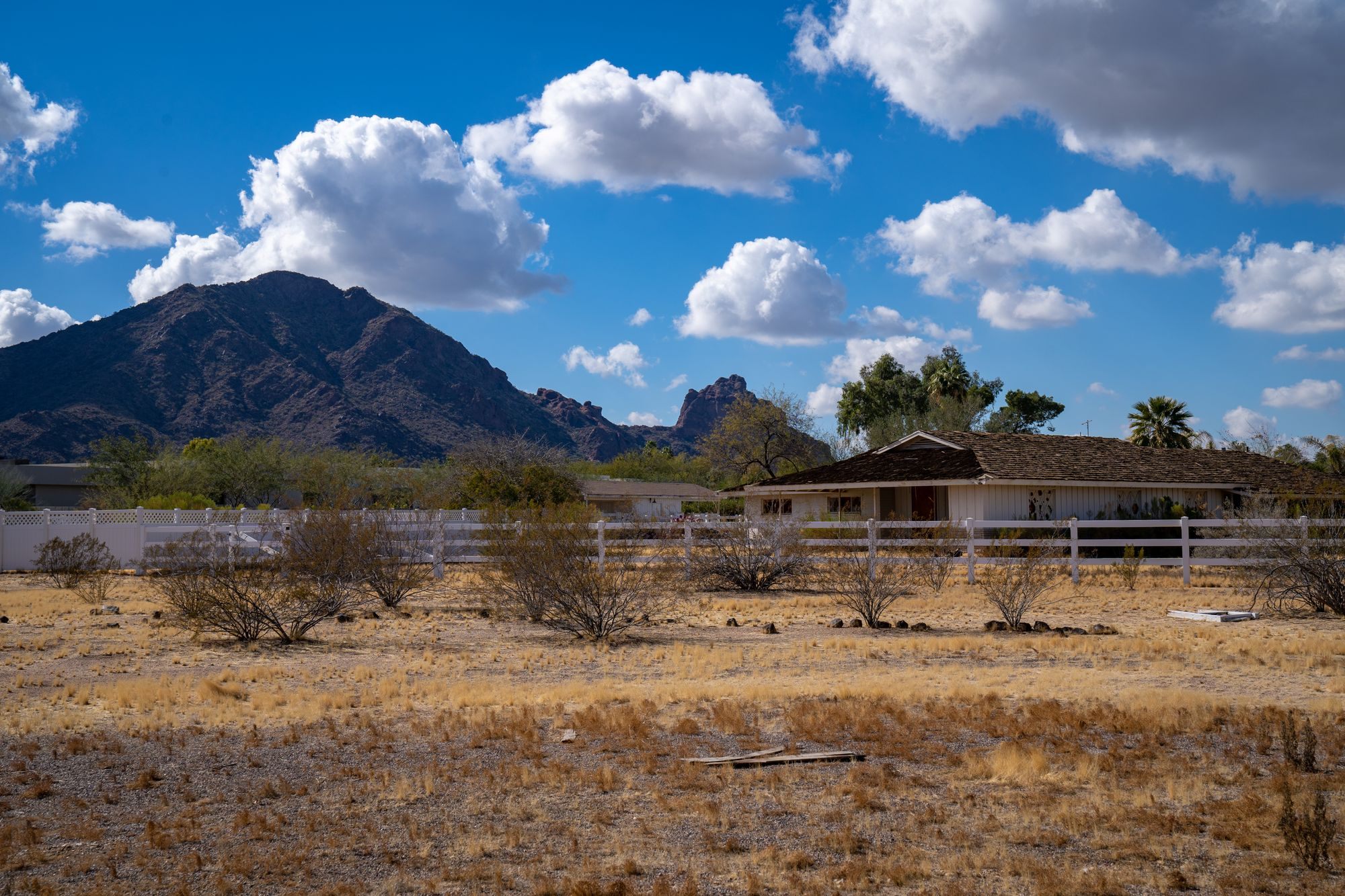
Yuma to Flagstaff
Refinances closed through an Arizona escrow office near you, wherever in the state the home is.
Six Arizona details on a refinance file.
These decide what an Arizona refinance costs and whether it funds. All of them are on your Loan Estimate from the start.
01
No tax on the new loan
The deed of trust records for a flat county fee. Arizona refinance costs are the lender’s fees, title, escrow and the appraisal, nothing more.
02
Escrow closing
You sign at an escrow office or with a mobile notary, the three-business-day right to cancel runs when the home is your principal residence, and the loan funds when the deed of trust records.
03
HOA dues
Most metro Phoenix and Tucson homes carry them, and they count in your debt ratio on a refinance just as on a purchase.
04
The appraisal in the desert
Required on most refinances except streamlines. Appraisers look at the roof, the air conditioning, monsoon water damage and pool barriers.
05
Taxes in two halves
Property taxes are due October 1 and March 1 for the previous year. A refinance sets up a new escrow and the old one is refunded after payoff.
06
Proposition 130
A disabled veteran’s property tax exemption lowers the tax escrow in the new payment; we set it up with the exemption you hold.
When does an Arizona refinance pay for itself?
Enter your current loan and the new rate. With no state tax, the closing costs are the lender, title, escrow and appraisal fees, and the calculator shows the break-even month.
The U.S. mortgage market right now.
National average rates from the Federal Reserve Bank of St. Louis FRED database: the Freddie Mac survey for conventional and the Optimal Blue indices for FHA and VA, shown as third-party market benchmarks, not MortgagePros pricing. Your refinance rate and APR depend on your credit, equity, loan type and the day you lock.
Conventional 30-year fixed, U.S. average
7.40%
FHA 30-year fixed, U.S. average
7.18%
VA 30-year fixed, U.S. average
7.09%
Sources: Freddie Mac Primary Mortgage Market Survey (conventional, 30-year national average, week of Oct 8, 2026) and Optimal Blue Mortgage Market Indices (FHA and VA, 30-year national averages as of Oct 8, 2026), distributed through FRED, Federal Reserve Bank of St. Louis; the figures and dates refresh automatically from the source. These are third-party market benchmarks, not MortgagePros rates and not an offer of credit. Your rate and APR depend on your credit, loan type, property and lock date.
How an Arizona refinance works with us.
Four steps, one licensed pro, and a closing through an Arizona escrow office near you.
1
The break-even first
Your current loan, the new rate and every closing cost in one estimate with the month the refinance pays for itself.
2
The right refinance, priced side by side
Rate-and-term, cash-out, FHA Streamline or VA IRRRL compared for your file.
3
Appraisal and title
Appraisal ordered early where one is needed, title and escrow opened at the same time.
4
Close through escrow
Signing at an Arizona escrow office near you or with a mobile notary. The loan funds when the deed of trust records, after the cancellation period that applies to a principal residence.
Ready to see your Arizona break-even?
An Arizona-licensed pro shows you the new payment, every cost, and the month the refinance pays for itself. Free, and it starts without a hard credit pull.
Refinancing in Arizona, answered.
The questions Arizona homeowners ask us most. If yours is not here, a licensed pro will answer it directly, with no obligation.
What does an Arizona refinance cost?
The lender’s fees, a new lender’s title policy, the escrow fee, an appraisal where one is required, and prepaid interest and escrow. There is no state tax on the new loan and no transfer tax. On a $350,000 refinance the total is commonly a few thousand dollars, depending on the lender’s charges and whether an appraisal is needed; your actual costs are itemized on the Loan Estimate before you commit.
Does Arizona tax a refinance?
No. Arizona has no transfer tax and no tax on recording a deed of trust; you pay a flat county recording fee. That is the main reason an FHA Streamline or VA IRRRL in Arizona pays for itself sooner than in states that tax the new loan.
How much equity do I need?
About 5 percent for a conventional rate-and-term refinance, and on a primary residence you generally keep 20 percent equity after an FHA or conventional cash-out; second homes and rentals are capped lower. VA cash-out can go higher under VA rules, though most lenders cap it at 90 percent. FHA Streamlines and VA IRRRLs usually need no appraisal at all.
How long does an Arizona refinance take to fund?
After you sign, a refinance secured by your principal residence has a three-business-day right to cancel under federal law (a refinance with your current lender is covered only as to new money, and a second home or rental has none), and the loan funds when the escrow company records the new deed of trust, usually the next business day after that. Timelines before signing depend on the appraisal and underwriting.
Can I refinance to get rid of FHA mortgage insurance?
Yes, and it is the most common Arizona refinance. Once you have about 20 percent equity, a conventional refinance removes the premium for good, and with no state tax the closing costs are modest. We show you the saving beside the costs so you can see the break-even before anything is ordered.
Do I have to come to Michigan?
No. Your licensed pro handles the refinance by phone, email and e-signature, and the closing runs through an Arizona escrow office near you or with a mobile notary.
Talk to a Arizona-licensed pro about refinancing.
Tell us what you are looking to do and where in Arizona. A licensed pro will call back, usually the same business day. Asking does not start a loan or require a hard credit pull.

Prefer to talk?
248-416-1361
Open 24/7. Ask for your pro by name.

Visit our office
880 W. Long Lake Rd, Suite 300
Troy, Michigan 48098, just off I-75. Free parking.

Licensed and reviewed
Arizona Mortgage Banker License 1029604 and Mortgage Broker License 1021032. NMLS #1925352. Rated 4.9 across 5,300+ Google reviews.