
Conventional Home Loans in Georgia
From a Grant Park bungalow from 3 percent down to a Lake Lanier second home at 10, conventional is Georgia’s default mortgage. The state adds the intangible tax of $1.50 per $500 borrowed and a closing at a Georgia attorney’s office, both quoted up front. Mortgage insurance cancels as equity grows, and we are licensed in all 159 counties.
Georgia Mortgage Lender License/Registration, NMLS #1925352.
Conventional in Georgia, 2026
Conforming limit
$832,750 in every Georgia county
Down payment
From 3% for eligible buyers; 10% second home; 15% rental
Mortgage insurance
Cancellable at 80% of original value, none from 20% down
Intangible tax
$1.50 per $500 of the loan, paid by the borrower
Closing
Georgia attorney, as state law requires
3%
Minimum down payment on a first home
$1.50
Intangible tax per $500 of the loan
159
Georgia counties, licensed statewide
4.9
Average of 5,300+ Google reviews
The default Georgia mortgage, with two state habits.
Most Georgia purchases that are not FHA or VA are conventional, for plain reasons: as little as 3 percent down for eligible buyers, pricing that rewards good credit, and mortgage insurance that is temporary, cancellable at 80 percent of the original value on request and gone automatically at 78 percent while the loan is current. From 20 percent down there is no insurance line at all. The 2026 conforming limit is $832,750 in every one of Georgia’s 159 counties, metro Atlanta included.
Georgia adds two habits to every loan. The intangible tax, $1.50 per $500 of the new mortgage, is the borrower’s: $1,050 on a $350,000 loan, due on purchases and again on refinances, capped at $25,000. And closings happen at a Georgia attorney’s office, because state law treats a real estate closing as the practice of law; the buyer or borrower chooses the firm and pays the fee. Both are on the Loan Estimate from the first quote.
This page covers conventional loans in Georgia. For the state as a whole, see our Georgia page; the conventional hub explains the program itself. FHA in Georgia is the lower-score comparison, and buying in Georgia and refinancing in Georgia walk through the transactions.
Conventional guidelines, and what Georgia adds.
The first two columns are the Fannie Mae and Freddie Mac rules every lender starts from; the last is the Georgia layer. Your pro confirms which apply to your file.
| Requirement | Guideline | In Georgia |
|---|---|---|
| Down payment | As little as 3% on some programs for eligible buyers, commonly 5%; 10% second home; 15% rental | Lake and mountain second homes, Lanier to Blue Ridge, are financed this way |
| Credit score | Usually 620; best pricing from about 740 | Same statewide; the score drives both the rate and the mortgage insurance premium |
| Mortgage insurance | Required under 20% down; cancellable at 80% of original value, automatic at 78% while the loan is current | No state wrinkle; metro Atlanta appreciation has retired many premiums early |
| Loan limit | $832,750 for one unit in 2026 | Statewide, Atlanta included; above it the file is jumbo |
| Seller contributions | 3% of the price with under 10% down, 6% with 10% to 25%, 9% above that | Often negotiated toward the intangible tax and the attorney’s fee |
| Debt-to-income ratio | Up to about 45 to 50% with strong compensating factors | Property taxes vary by county and city; the escrow line is set from the actual bill |
Guidelines are Fannie Mae and Freddie Mac’s; individual lenders can be stricter. The limit is the FHFA figure for 2026 and resets each year.
Three ways Georgians use conventional.
One program, three different files. All three close at a Georgia attorney’s office of your choosing.
From 3% down
Buying a home
Eligible buyers can start at 3 percent down on some programs, most at 5, anywhere from intown Atlanta to Savannah. From 20 percent down the payment runs without a mortgage insurance line at all.
Drop FHA MI
Refinancing out of FHA
Atlanta’s price growth has pushed many FHA buyers past 20 percent equity. A conventional refinance removes the premium for good; the intangible tax on the new loan goes into the break-even before you commit.
Second homes and rentals
The lake and the campus
A Lake Lanier or Blue Ridge second home from 10 percent down, or a rental near Athens or Midtown from 15. Conventional is the only mainstream route for both.
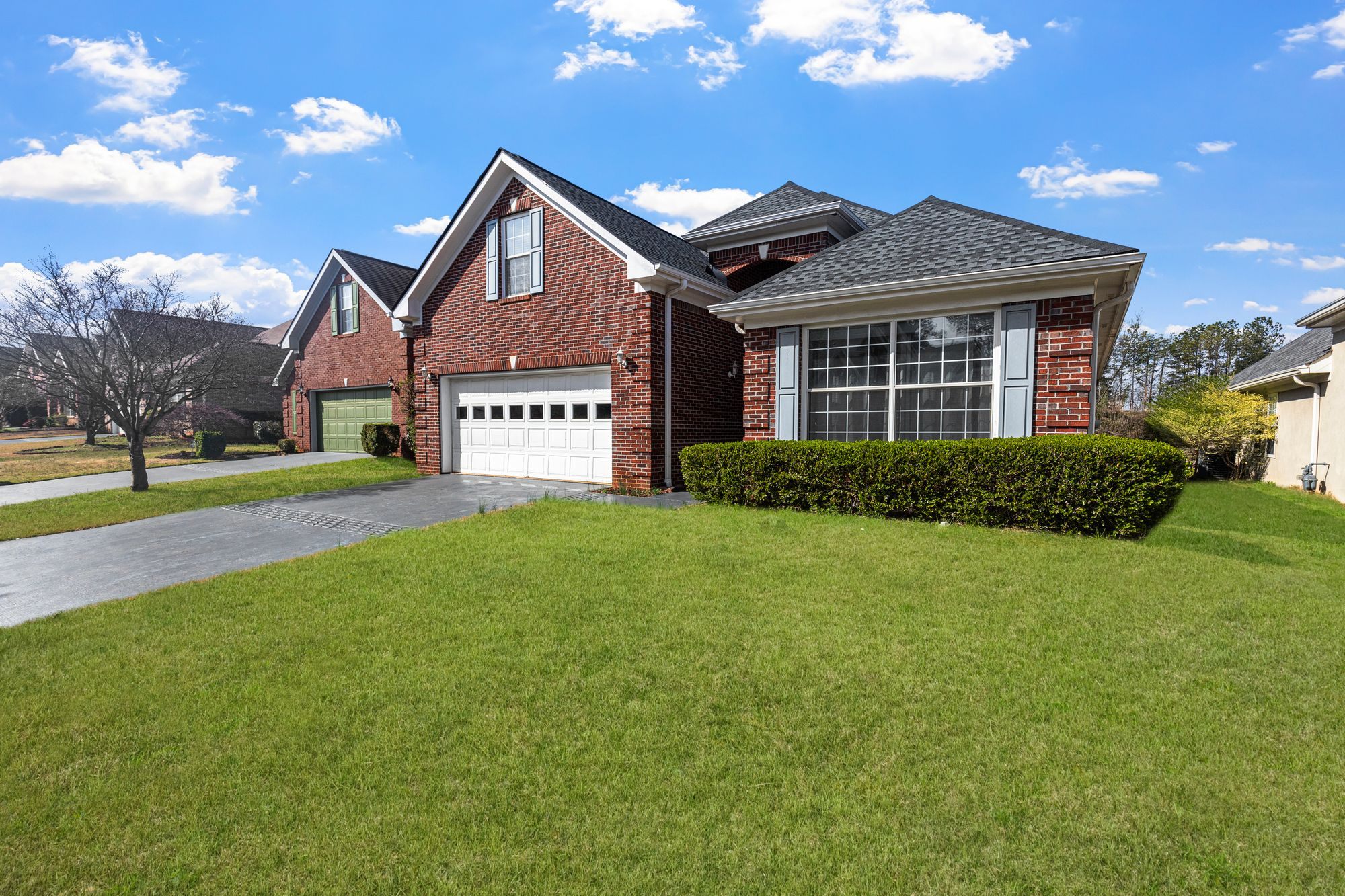
The intangible tax belongs in the arithmetic, not the surprise column.
Georgia’s intangible tax is small enough to overlook and large enough to matter: $1.50 per $500 of the loan means $1,050 on a $350,000 mortgage, paid by the borrower at closing, and paid again if you refinance later. When we compare conventional against FHA, or a refinance against staying put, that line is in the math from the start, next to the attorney’s fee and the lender’s charges.
The other side of the ledger is the insurance. Conventional’s premium prices by credit score, cancels at 80 percent of the original value on request and ends automatically at 78 percent while the loan is current. For buyers with strong credit, that combination often costs less over the years than FHA’s flat premium, which runs for the life of the loan, and we show the crossover on one page.

Savannah to the mountains
Conventional purchases and refinances closed at a Georgia attorney’s office near you, in all 159 counties.
Six Georgia details on a conventional file.
The state-level facts that shape cost and timing. All of them appear on your Loan Estimate from the start.
01
Intangible tax
$1.50 per $500 of the new mortgage, borrower-paid, capped at $25,000. Due on purchases and again on refinances; there is no transfer tax on a refinance because no deed is recorded.
02
Attorney closings
Georgia law requires a licensed attorney to conduct the closing. You choose the firm, the fee commonly runs several hundred to about a thousand dollars, and we coordinate the package with their office.
03
Transfer tax on purchases
$1 per $1,000 of the price on the deed, customarily the seller’s line. It never applies to a refinance.
04
Homestead exemption
Own and occupy by January 1 and apply by April 1 with your county. It trims the assessed value your escrow is built on, and buying resets the clock.
05
Appraisal waivers happen
On strong files with plenty of equity the agencies sometimes waive the appraisal, which saves money and days. We tell you if your file qualifies.
06
Termite letters
Georgia contracts commonly call for a wood-infestation report. It is a purchase custom rather than a conventional requirement, and your attorney collects it for closing.
What would a conventional payment look like?
Set the price and your down payment. Under 20 percent down, include the mortgage insurance estimate; closing costs should include the intangible tax and the attorney’s fee.
The U.S. conventional market right now.
National average rates from the Federal Reserve Bank of St. Louis FRED database: the Freddie Mac survey for conventional and the Optimal Blue indices for FHA and VA, shown as third-party market benchmarks, not MortgagePros pricing. Your rate and APR depend on your credit, down payment, property type and the day you lock.
Conventional 30-year fixed, U.S. average
7.40%
FHA 30-year fixed, U.S. average
7.18%
VA 30-year fixed, U.S. average
7.09%
Sources: Freddie Mac Primary Mortgage Market Survey (conventional, 30-year national average, week of Oct 8, 2026) and Optimal Blue Mortgage Market Indices (FHA and VA, 30-year national averages as of Oct 8, 2026), distributed through FRED, Federal Reserve Bank of St. Louis; the figures and dates refresh automatically from the source. These are third-party market benchmarks, not MortgagePros rates and not an offer of credit. Your rate and APR depend on your credit, loan type, property and lock date.
How a conventional loan works with us in Georgia.
Four steps, one licensed pro, a Georgia attorney closing.
1
The numbers first
Price or current loan, down payment or equity, and the whole payment with taxes, insurance and any mortgage insurance, plus the intangible tax and attorney’s fee itemized.
2
The right structure
Down payment against pricing tiers, mortgage insurance options side by side, FHA compared where the score makes it close.
3
Underwriting and appraisal
Documents in early, the appraisal ordered where one is needed, and the attorney’s office engaged as soon as the contract is signed.
4
Close at the attorney’s office
Sign at the firm you chose; the intangible tax and fees appear on the closing statement exactly as quoted.
Ready to price a conventional loan in Georgia?
A Georgia-licensed pro shows you the payment, the mortgage insurance options, the intangible tax and the attorney’s fee on one page. Free, and it starts without a hard credit pull.
Conventional loans in Georgia, answered.
The questions Georgia borrowers ask us most. If yours is not here, a licensed pro will answer it directly, with no obligation.
What is the intangible tax and who pays it?
Georgia’s tax on recording a mortgage: $1.50 per $500 of the loan, capped at $25,000, paid by the borrower. On a $350,000 loan it is $1,050. It applies to purchases and again to refinances, and it is itemized on your Loan Estimate from the first quote.
Why does my closing have to be at an attorney’s office?
Georgia law treats a real estate closing as the practice of law, so a licensed Georgia attorney conducts it. You choose the firm and pay the fee. For a refinance, many firms can send a mobile closer to you; the attorney still supervises the file.
What credit score do I need?
Most lenders start at 620, with the best pricing from about 740. Below roughly 680 we price FHA beside conventional, because FHA’s mortgage insurance does not climb with the score the way conventional’s does, and we show both on one page.
When does mortgage insurance come off?
Request cancellation at 80 percent of the original value, automatic termination at 78 percent while the loan is current, and none at all from 20 percent down. Metro Atlanta’s appreciation has carried many recent buyers past those marks already; ask your servicer which rules apply before paying for a refinance.
When is a loan jumbo in Georgia?
Above $832,750 for a one-unit home in 2026, in every county. Buckhead, Sandy Springs and the lake markets cross the line regularly; jumbo in Georgia covers those files, including how the intangible tax scales with the loan.
Do I have to come to Michigan?
No. Your licensed pro handles the loan by phone, email and e-signature, and the closing happens at the Georgia attorney’s office you choose.
Talk to a Georgia-licensed pro about a conventional loan.
Tell us what you are looking to do and where in Georgia. A licensed pro will call back, usually the same business day. Asking does not start a loan or require a hard credit pull.

Prefer to talk?
248-416-1361
Open 24/7. Ask for your pro by name.

Visit our office
880 W. Long Lake Rd, Suite 300
Troy, Michigan 48098, just off I-75. Free parking.

Licensed and reviewed
Georgia Mortgage Lender License/Registration, NMLS #1925352. Rated 4.9 across 5,300+ Google reviews.