Conventional Home Loans in Michigan
Looking for a reliable and flexible mortgage option to buy a home in Michigan? A conventional home loan might be the right choice for you. At MTG Pros, we specialize in helping homebuyers find conventional loan options that fit, helping make your path to homeownership as smooth as possible.
Licensed in 39 states from our Troy headquarters. Rated 4.9 across 5,400+ Google reviews. Quotes are free and start with no hard credit inquiry.
The question Michigan buyers ask
Conventional
Down payment from
3 percent
Credit score from
About 620
Mortgage insurance
Cancelable at 80% of original value; ends automatically at 78%
Upfront insurance fee
None
Michigan loan limit, 2026
$832,750 in every county
FHA
Down payment from
3.5 percent
Credit score from
About 580
Mortgage insurance
11 years or the life of the loan
Upfront insurance fee
1.75 percent of the loan
Michigan loan limit, 2026
$541,287 in every county
Stronger credit usually points to conventional. A thinner file or a recent credit event often points to FHA. We price both and show you the difference in writing.
2019
Founded in Troy, Michigan
300+
Licensed loan officers on the team
4.9
Average of 5,400+ Google reviews
39
States licensed, headquartered here
What is a Conventional Home Loan?
A conventional home loan is a type of mortgage that is not insured or guaranteed by the government. These loans typically come with more flexible terms and competitive rates, making them an ideal choice for buyers with solid credit and a stable financial profile. Conventional loans can be used to purchase a primary residence, second home, or investment property.
Benefits of a Conventional Home Loan
01
Competitive interest rates
Conventional loans often offer lower interest rates for qualified buyers, which can result in significant savings over time.
02
Flexible loan terms
Choose between 15, 20, or 30-year terms, depending on your financial situation and long-term goals.
03
Lower private mortgage insurance (PMI)
With a down payment of at least 20%, you can avoid paying PMI altogether, reducing your monthly mortgage costs.
04
No upfront mortgage insurance
Unlike FHA or other government-backed loans, conventional loans do not require upfront mortgage insurance premiums.
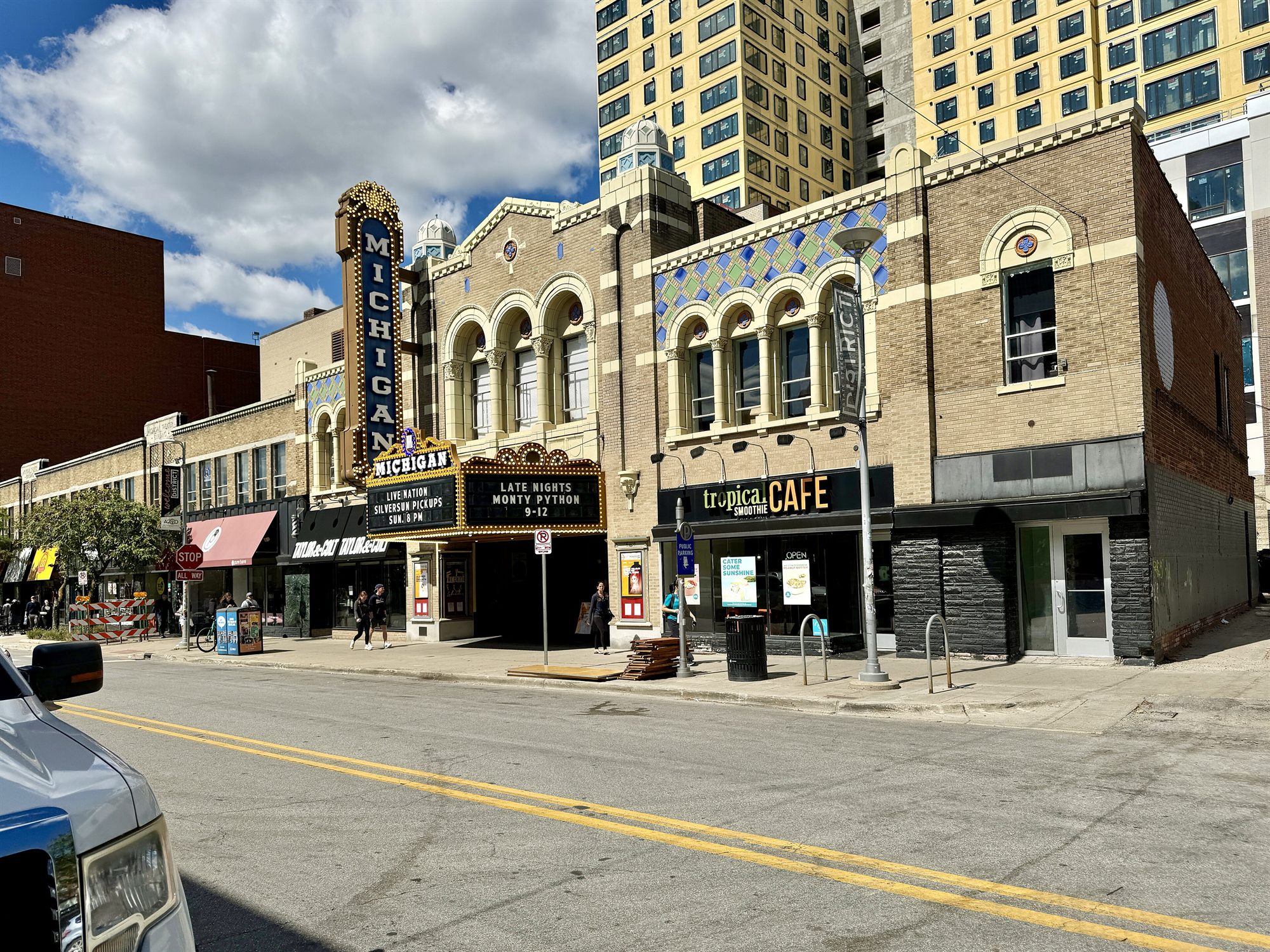
Ann Arbor and Washtenaw County
Where prices push toward the conforming line, we check both sides of it before you write an offer.
Who Qualifies for a Conventional Home Loan?
To qualify for a conventional home loan, borrowers typically need:
- A credit score of at least 620: While some lenders may accept lower scores, a higher score improves your chances of securing better rates and terms.
- A down payment of at least 3%: Conventional loans allow for lower down payments than many people expect, making them accessible for a variety of buyers.
- A stable income and employment history: Lenders will look at your income, assets, and employment history to ensure you can manage monthly payments.
Types of Conventional Home Loans
Most common
Fixed-Rate Loans
A fixed-rate mortgage ensures that your interest rate remains the same for the life of the loan, providing stability and predictability in your monthly payments.
Short-term owners
Adjustable-Rate Mortgages (ARM)
With an ARM, the interest rate may change periodically based on the market, often starting lower than fixed-rate loans, making it an attractive option for short-term homeowners.
Every Michigan county sits at the same conforming limit.
In 2026 the conforming limit is $832,750 in all 83 counties, so a conventional loan covers nearly every home in the state, from Detroit bungalows to lakefront places up north.
With solid credit it is often the lowest-cost option: no upfront insurance premium, monthly insurance you can cancel at 20 percent equity on the original value (it ends automatically at 78 percent), and down payments from 3 percent for first-time buyers.

Is a Conventional Home Loan Right for You?
A conventional home loan can be a great option for homebuyers who have good credit, a stable income, and the ability to make a down payment. If you’re looking for flexibility in loan terms and the potential to avoid private mortgage insurance, this might be the best path to homeownership for you.
Why Choose MTGPros for Your Conventional Loan?
At MTGPros, we understand the Michigan housing market and are dedicated to finding you the best mortgage options. Our team of mortgage experts will guide you through the process, from pre-approval to closing, ensuring that you make informed decisions every step of the way.
Contact Us Today
Ready to explore your conventional loan options? Contact MTGPros today for a free consultation. We’ll help you understand your options and find the best mortgage solution to fit your needs in Michigan.
Try it against a real Michigan payment.
Change the down payment and watch the mortgage insurance line. On a conventional loan you can ask to cancel it once you reach 20 percent equity based on the original value, and it ends automatically at 78 percent, which is a big part of the argument for the program.
Breakdown
Conventional home loans are mortgage loans that are not insured or guaranteed by a government agency like the Federal Housing Administration (FHA), the Department of Veterans Affairs (VA), or the Rural Housing Service (RHS). Instead, these loans are offered by private lenders such as banks, credit unions, and mortgage companies. Here is some general information about conventional home loans, but keep in mind that specific details may vary among lenders:
Credit Requirements
Generally, conventional loans may have stricter credit requirements compared to government-backed loans. Lenders typically prefer borrowers with a solid credit history and a higher credit score.
Down Payment
Conventional loans often require a higher down payment compared to FHA loans, for example. The down payment requirement can vary but is commonly around 5% to 20% of the home’s purchase price.
Loan Limits
There are limits on the amount you can borrow with a conventional loan. These limits may vary depending on the area and are set by the Federal Housing Finance Agency (FHFA).
Private Mortgage Insurance (PMI)
If you put down less than 20% of the home’s purchase price, you may be required to pay private mortgage insurance (PMI) to protect the lender in case of default. Once you have built up enough equity, you can typically request the removal of PMI.
Interest Rates
Conventional loan interest rates can vary among lenders, and they are influenced by factors such as credit score, down payment amount, and market conditions. It’s essential to shop around for the best interest rates and loan terms.
Loan Types
Conventional loans come in various types, including fixed-rate mortgages and adjustable-rate mortgages (ARMs). Fixed-rate mortgages have a constant interest rate over the life of the loan, while ARMs have a variable interest rate that can change at specified intervals.
For more specific information, including current interest rates, eligibility criteria, and application processes, it’s recommended to visit the websites of reputable lenders or financial institutions that offer conventional home loans. These websites often provide tools and resources to help you understand the loan process, calculate payments, and even apply online. Always make sure to carefully review the terms and conditions of any loan before proceeding.
Four things that are different about buying in Michigan.
They shape every conventional loan we close in the state, and the first one catches buyers from elsewhere off guard.
01
Your property tax bill resets when you buy
Michigan caps how fast a home’s taxable value can rise each year, and that cap comes off when ownership transfers. The seller’s bill reflects their capped value; yours will be based on the current state equalized value, which can be materially higher. Budget from the SEV, not the seller’s bill, and file the Principal Residence Exemption, which removes up to 18 mills of school operating tax on the home you live in.
02
Transfer tax is the seller’s cost by default
Michigan charges $3.75 per $500 of price to the state and $0.55 per $500 to the county, and the seller pays unless the purchase agreement says otherwise. Buyers pay recording fees and title charges instead, which are far smaller.
03
Loan limits are simple here
Every Michigan county uses the national baseline: $832,750 for a conforming loan and $541,287 for an FHA loan on a one-unit home in 2026. There are no high-cost counties in the state, so the limit is the same in Troy, Detroit, Lansing and Ann Arbor.
Michigan Counties We Serve
MTGPros provides conventional loan services throughout Michigan, including:
Metro Detroit Area
Wayne County – Detroit, Dearborn, Livonia, Westland
Oakland County – Troy, Bloomfield Hills, Birmingham, Royal Oak
Macomb County – Sterling Heights, Clinton Township, Warren
Washtenaw County – Ann Arbor, Ypsilanti
West Michigan
Kent County – Grand Rapids, East Grand Rapids, Wyoming
Ottawa County – Holland, Grand Haven, Zeeland
Muskegon County – Muskegon, Muskegon Heights
Allegan County
Mid-Michigan
Ingham County – Lansing, East Lansing
Eaton County
Clinton County
Genesee County – Flint
Northern Michigan
Grand Traverse County – Traverse City
Leelanau County
Emmet County – Petoskey
Charlevoix County
Licensed in all 83 Michigan counties and headquartered in Troy. Local pages for Detroit, Ann Arbor, Lansing and the Michigan hub.
Conventional loans in Michigan, answered.
The questions Michigan buyers ask us most when weighing conventional against the alternatives.
What is the conventional loan limit in Michigan?
For 2026 it is $832,750 for a one-unit home in every Michigan county. There are no high-cost counties in the state, so the figure is the same in Troy, Detroit, Grand Rapids and Traverse City. A loan above it is a jumbo loan with its own requirements.
When does private mortgage insurance come off?
You can request cancellation once your balance reaches 80 percent of the original purchase price, and the lender must remove it automatically at 78 percent. If your home has appreciated, a new appraisal can get you there sooner. This is the key difference from FHA, where the insurance usually lasts the life of the loan.
Conventional or FHA in Michigan?
Credit is usually the deciding factor. Above roughly 680 a conventional loan tends to cost less overall. Below 620 FHA is generally the realistic route. In the band between, we price both and show you the total cost over the years you expect to keep the loan.
Can I buy a rental or a second home in Michigan with a conventional loan?
Yes, and it is the main reason investors choose conventional financing. FHA and VA loans are for primary residences only. Expect to put 15 percent or more down on a single-unit rental and hold around six months of payments in reserve.
Get your Michigan conventional quote.
Tell us the price range and roughly what you can put down. A licensed pro will come back with conventional and FHA priced side by side, usually the same business day.

Prefer to talk?
248-416-1361
Open 24/7. Ask for your pro by name.

Visit our office
880 W. Long Lake Rd, Suite 300
Troy, Michigan 48098, just off I-75. Free parking.

Licensed and reviewed
Michigan 1st Mortgage Broker/Lender License FL0023852. NMLS #1925352. Rated 4.9 across 5,400+ Google reviews.