Michigan FHA Home Loans
If you’re looking to buy a home in Michigan but have concerns about qualifying for a traditional mortgage, an FHA home loan could be the ideal solution. At MTGPros, we specialize in helping Michigan homebuyers take advantage of the Federal Housing Administration (FHA) loan program, which offers more flexible credit and down payment requirements, making homeownership more accessible to thousands of Michigan families every year.
Licensed in 39 states from our Troy headquarters. Rated 4.9 across 5,200+ Google reviews. Checking costs nothing and starts with no hard credit inquiry.
What your credit score opens
500 to 579
580 to 619
620 and above
FHA, 10% down
Still possible, with a larger down payment and a closer look at the file.
FHA, 3.5% down
The band FHA was built for. Conventional is usually out of reach here.
FHA or conventional
Both are open. We price them side by side and show you which costs less.
Lenders add their own minimums on top of the FHA floor, and some will not go below 580. We know which ones will.
2019
Founded in Troy, Michigan
300+
Licensed loan officers on the team
4.9
Average of 5,200+ Google reviews
39
States licensed, headquartered here
Whether you’re a first-time homebuyer in Detroit looking at affordable starter homes, a growing family in Grand Rapids seeking more space, or moving to Ann Arbor for career opportunities, FHA loans provide a proven pathway to homeownership—even if you don’t have perfect credit or substantial savings for a down payment.
Michigan’s diverse housing market—from $150,000 starter homes in Lansing to $400,000 properties in Birmingham—means there’s something for everyone. With FHA loan limits in Michigan reaching up to $541,287 for single-family homes in 2026, you have the borrowing power to find your perfect home across all 83 Michigan counties.
At MTGPros, we help Michigan residents across the state buy with FHA financing. Our experienced team understands the unique challenges Michigan buyers face—from saving for winter repairs to navigating Detroit’s revitalizing neighborhoods—and we’re here to guide you through every step of the FHA loan process.
What is an FHA Home Loan?
An FHA home loan is a mortgage insured by the Federal Housing Administration, a government agency created in 1934 to help make homeownership more accessible to Americans. Unlike conventional loans, FHA loans are designed specifically to help low- to moderate-income individuals and families buy homes, particularly those with lower credit scores or limited funds for a down payment.
Here’s what makes FHA loans different:
- Government Backing: The FHA doesn’t lend money directly—instead, it insures loans made by FHA-approved lenders. This insurance protects lenders if borrowers default, which allows lenders to offer more flexible terms than they could with conventional loans.
- Accessibility Focus: FHA loans were created specifically to expand homeownership opportunities to people who might not qualify for traditional financing. This mission continues today, making FHA loans a popular choice for first-time homebuyers in Michigan.
- Consistent Standards: FHA loan requirements are standardized nationwide, but loan limits vary by location to reflect local housing costs. In Michigan, these limits are set to match our state’s affordable housing market.
WHO USES FHA LOANS IN MICHIGAN?
- First-time homebuyers
- Buyers with credit scores between 580-680
- People who can’t save a 20% down payment
- Self-employed individuals or those with non-traditional income
- Buyers in revitalizing areas of Detroit, Flint, and other Michigan cities
- Young professionals just starting to build credit
- Families who experienced financial setbacks but have recovered
Types of FHA Loans Available in Michigan
The FHA offers several loan programs designed for different situations. Here’s what’s available to Michigan homebuyers:
FHA 30-YEAR FIXED-RATE MORTGAGE
- What it is: Traditional 30-year fixed-rate mortgage with consistent monthly payments
- Best for: – First-time homebuyers who want predictable payments
- Buyers who plan to stay in the home long-term
- Those who prefer lower monthly payments
Benefits:
- Most popular FHA loan type
- Lowest monthly payment option
- Rate never changes
- Easiest to qualify for
FHA 15-YEAR FIXED-RATE MORTGAGE
- What it is: 15-year fixed-rate mortgage with higher monthly payments but lower rates and less total interest
- Best for:
– Buyers with higher income who can afford larger payments - Those who want to build equity quickly
- Buyers nearing retirement who want to pay off homes faster
- Benefits: – Pay off your home in half the time
- Save tens of thousands in interest
- Lower interest rate
- Build equity much faster
FHA ADJUSTABLE-RATE MORTGAGE (ARM)
- What it is: Mortgage with a fixed rate for initial period (1, 3, 5, 7, or 10 years), then adjusts annually
- Common ARM types: – 5/1 ARM: Fixed for 5 years, then adjusts annually
- 7/1 ARM: Fixed for 7 years, then adjusts annually
- 10/1 ARM: Fixed for 10 years, then adjusts annually
Best for:
- Buyers who plan to move within 5-7 years
- Those expecting income increases
- Buyers in high-rate environments expecting rates to drop
Benefits:
- Lower initial rate and payment
- Rate caps limit how much rate can increase
- Can refinance to fixed-rate later
FHA STREAMLINE REFINANCE
- What it is: Simplified refinance program for existing FHA loan holders to lower their rate or payment
- Eligibility: – Must currently have an FHA loan
- Must be current on payments (no 30-day lates in past 6 months)
- Must result in lower payment or switch from ARM to fixed
- Must have paid at least 6 monthly payments on current FHA loan
Best for:
- Current FHA borrowers when rates drop
- Switching from ARM to fixed-rate
- Lowering monthly payment
Benefits:
- No appraisal required (in most cases)
- No income verification required
- No employment verification required
- Less documentation than standard refinance
- Often no full credit review (lender rules vary)
- Often a quicker closing than a standard refinance
FHA CASH-OUT REFINANCE
- What it is: Refinance that allows you to borrow more than you owe and receive cash difference
- Maximum cash-out: Up to 80% of home’s current value
Best for:
- Home renovations or improvements
- Debt consolidation
- Major expenses (medical, education)
- Emergency funds
Basic Requirements:
- Must occupy home as primary residence
- Minimum credit score: 580
- Must have equity in your home
- 12 months of on-time payments required

Statewide, the FHA limit reaches most of the Michigan market.
Every Michigan county is at the 2026 FHA floor of $541,287. With median prices well below that in most of the state, FHA works for the large majority of homes buyers are actually looking at.
The 3.5 percent down payment can be a documented gift from family. Your pro checks the numbers on the first call.
Is a FHA Home Loan Right for You?
A FHA home loan is ideal for first-time homebuyers or those with less-than-perfect credit. If you’ve been turned down for a conventional loan or don’t have a large down payment, an FHA loan can help you achieve homeownership. However, it’s important to understand the long-term costs, including mortgage insurance premiums (MIP), which with less than 10 percent down are required for the life of the loan unless you refinance to a conventional mortgage.
Why Choose MTGPros for Your FHA Loan?
At MTGPros, we are dedicated to helping homebuyers in Michigan find the right mortgage options. Our experienced team will guide you through the FHA loan process, ensuring that you make informed decisions every step of the way. We’re committed to making homeownership possible, for buyers who may not fit a conventional loan.
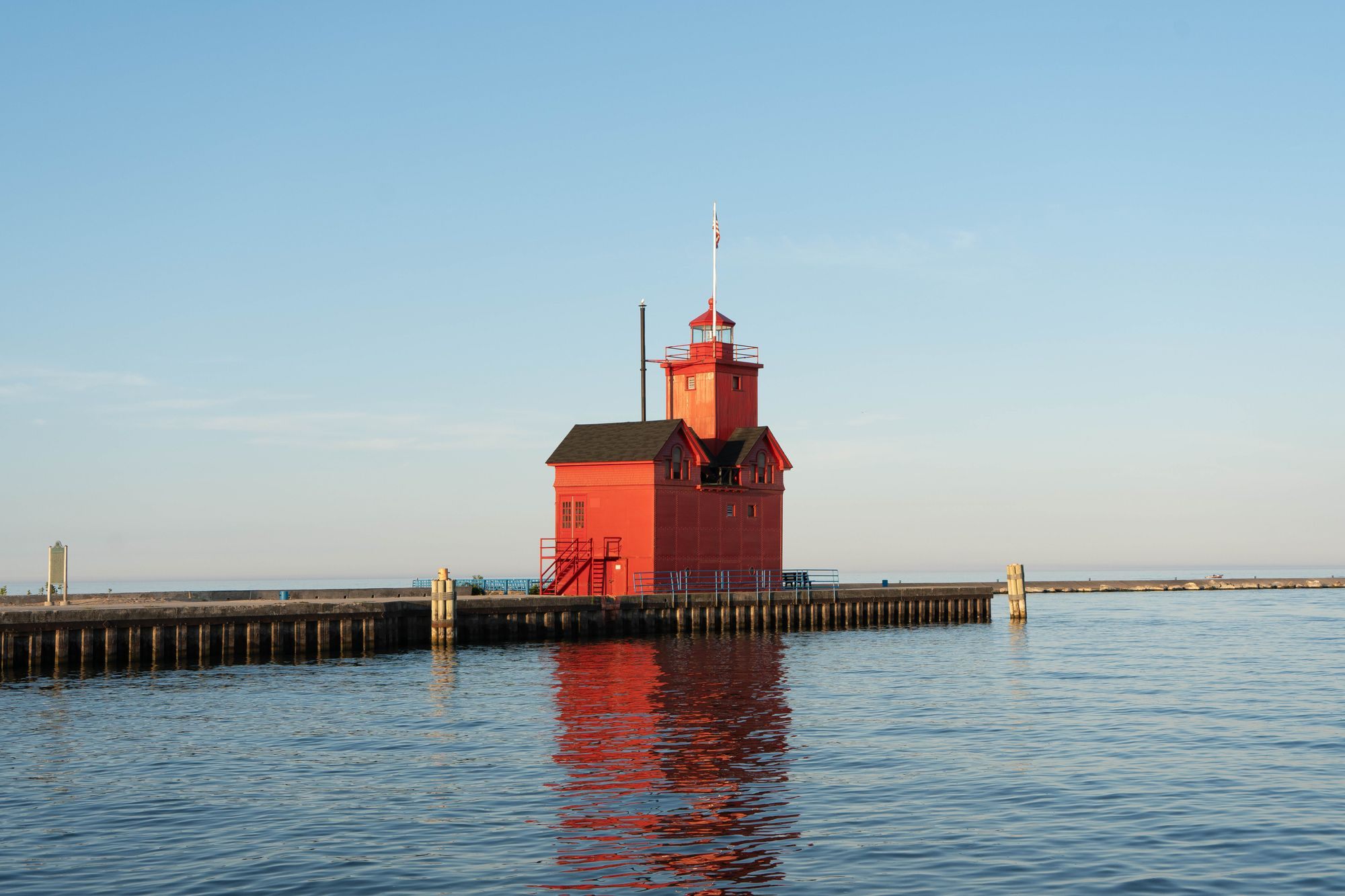
Holland and the Lakeshore
Every Michigan county sits at the 2026 FHA floor of $541,287, so the program reaches most of the market.
Current Michigan FHA rates.
National average rates from the Federal Reserve Bank of St. Louis FRED database, the Optimal Blue index for FHA and the Freddie Mac survey for conventional: third-party market benchmarks rather than typed figures that go stale. FHA note rates often look lower than conventional, but the mortgage insurance is part of the real cost, so compare the full payment.
FHA 30-year fixed, U.S. average
7.02%
Conventional 30-year fixed, U.S. average
7.32%
VA 30-year fixed, U.S. average
6.92%
Sources: Freddie Mac Primary Mortgage Market Survey (conventional, 30-year national average, week of Oct 22, 2026) and Optimal Blue Mortgage Market Indices (FHA and VA, 30-year national averages as of Oct 22, 2026), distributed through FRED, Federal Reserve Bank of St. Louis; the figures and dates refresh automatically from the source. These are third-party market benchmarks, not MortgagePros rates and not an offer of credit. Your rate and APR depend on your credit, loan type, property and lock date.
What would the payment be?
Pick FHA as the loan type and set the down payment to 3.5 percent of the price. The mortgage insurance line stays in the payment rather than falling away at 20 percent. MortgagePros is not affiliated with, endorsed by, or acting on behalf of the Federal Housing Administration, HUD or any government agency.
Four things that are different about buying in Michigan.
They shape every FHA loan we close in the state, and the first one catches buyers from elsewhere off guard.
01
Your property tax bill resets when you buy
Michigan caps how fast a home’s taxable value can rise each year, and that cap comes off when ownership transfers. The seller’s bill reflects their capped value; yours will be based on the current state equalized value, which can be materially higher. Budget from the SEV, not the seller’s bill, and file the Principal Residence Exemption, which removes up to 18 mills of school operating tax on the home you live in.
02
Transfer tax is the seller’s cost by default
Michigan charges $3.75 per $500 of price to the state and $0.55 per $500 to the county, and the seller pays unless the purchase agreement says otherwise. Buyers pay recording fees and title charges instead, which are far smaller.
03
Loan limits are simple here
Every Michigan county uses the national baseline: $832,750 for a conforming loan and $541,287 for an FHA loan on a one-unit home in 2026. There are no high-cost counties in the state, so the limit is the same in Troy, Detroit, Lansing and Ann Arbor.
Michigan Counties We Serve
MTGPros provides FHA loan services throughout Michigan, including:
Metro Detroit Area
Wayne County – Detroit, Dearborn, Livonia, Westland
Oakland County – Troy, Bloomfield Hills, Birmingham, Royal Oak
Macomb County – Sterling Heights, Clinton Township, Warren
Washtenaw County – Ann Arbor, Ypsilanti
West Michigan
Kent County – Grand Rapids, East Grand Rapids, Wyoming
Ottawa County – Holland, Grand Haven, Zeeland
Muskegon County – Muskegon, Muskegon Heights
Allegan County
Mid-Michigan
Ingham County – Lansing, East Lansing
Eaton County
Clinton County
Genesee County – Flint
Northern Michigan
Grand Traverse County – Traverse City
Leelanau County
Emmet County – Petoskey
Charlevoix County
Licensed in all 83 Michigan counties and headquartered in Troy. Local pages for Detroit, Ann Arbor, Lansing and the Michigan hub.
FHA in Michigan, answered.
The questions Michigan buyers ask us most about FHA financing.
What is the FHA loan limit in Michigan?
$541,287 for a one-unit home in 2026, and it is the same in every Michigan county because none of them is a high-cost area. Two- to four-unit properties have higher limits. The limit comfortably covers the vast majority of Michigan purchases.
Will an older Michigan home pass the FHA appraisal?
A well-kept one, yes. The appraiser checks that the home is sound and safe: roof, heating, plumbing and electrics working, no peeling paint on homes built before 1978, safe access. Repair conditions do come up on older Detroit, Flint and Lansing housing, and we flag them early so they can be negotiated with the seller.
How does FHA mortgage insurance work?
An upfront premium of 1.75 percent of the loan, normally financed into the balance, and an annual premium split across your monthly payments. With less than 10 percent down the annual premium stays for the life of the loan; the exit is refinancing into a conventional loan once you have 20 percent equity and the credit to qualify.
Do I have to come to your Troy office?
No. Almost every Michigan client works with us by phone, email and e-signature, and closes at a title company near them or with a mobile notary.
Contact Us for a Free Consultation
Interested in learning more about FHA loans? Contact MTGPros today for a free consultation. We’re here to help you understand your options and get started on your path to homeownership.

Prefer to talk?
248-416-1361
Open 24/7. Ask for your pro by name.

Visit our office
880 W. Long Lake Rd, Suite 300
Troy, Michigan 48098, just off I-75. Free parking.

Licensed and reviewed
Michigan 1st Mortgage Broker/Lender License FL0023852. NMLS #1925352. Rated 4.9 across 5,200+ Google reviews.